Category: General

  • Thoughts on Colonial: Europe’s Empires Overseas

    Thoughts on Colonial: Europe’s Empires Overseas

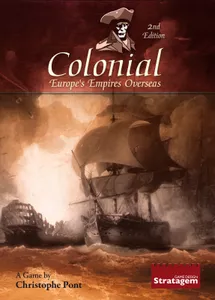
    Recently I played Colonial: Europe’s Empires Overseas (2011), a game I’ve played multiple times over the years – and I wanted to write some thoughts on how the game could be improved.

    I won’t go through all the rules or how to play, there’s many videos and rules online covering this.

    In the game players pre-program their cards in a row of 5, executing each card one by one resolving one action per card. These cards effect game state in several ways, all to aid the player to race to be the first to get 10 prestige.

    Over the years, my friends and I have dabbled around with several ideas on how to make the game a bit more streamlined, with additional decision space.

    These are some thoughts on possible improvements

    Make the rebel card more powerful

    The Rebel card adds unrest to a territory, or can spark a rebellion or remove a mission. However, in my multiple plays of the game I’ve often felt the rebel is quite weak. Firstly, you need multiple players to add rebels to make playing rebellion worthwhile, secondly multiple players might need to execute a rebellion.

    I’ve thought, what if you could pay coins equal to add more unrest into an area, or what if you could add rebels AND spark a rebellion in the area in the same turn where the consequence is you go down on the diplomacy track and no other player that round can move your goods via the Merchant card.

    I like the idea you are fermenting insurrection; I just wish it was more powerful.

    Make the ambassador actually worth playing

    The Ambassador card is perhaps the weakest card in the game, as it really doesn’t do anything other than move any player up one space on the diplomacy track and remove unrest.

    What if the Ambassador allowed you to move goods to market from locations where you have discs (presence) but you are limited by your logistics track.

    What if the Ambassador allowed you to trade goods from the market, limited by the economy track only.

    What if the Ambassador used missions in an interesting way.

    The navy track should connect to game state

    The navy track only allows you to build more naval units; but it doesn’t affect anything during game play.

    What if the navy track could be linked to the idea of “gunboat diplomacy” in some way?

    What if the navy track could connect with your seafaring or logistics in some way?

    Pirates – an overhead we don’t need?

    During the game, players may need to do a pirate check if players are moving goods from the booming city whilst it has an unrest token there. Its fiddly and hard to remember. Having said that, pirates are painful because they can sink merchant ships.

    What if it was a bit clearer about pirates, or what if players attracted pirates which they put into their merchant fleet and they must deal with pirates either by paying them off, or fighting them with their navy, or they use dice to see how many goods they can move through

    There is almost no reason to say no to letting a rival shipping your goods via the Merchant card

    During the game a player may play the Merchant card. This ships goods to market. You can ask rivals, and if they say yes they will get paid immediately; and the shipper gets multiple goods to the market.

    However, there is no reason to say no. Early on you want the money, so obviously you are going to say yes. And later on you are just giving rivals money, effectively king-making them, so you should say no; although players rarely do – because, money!

    So, what if there WAS a reason to say no?

    Perhaps its a diplomatic reason?

    You could tie Merchant to the diplomacy track, that is to say, you can only ship goods of rivals if they are at the same level (or higher) in diplomacy.

    Another idea is you can only ship a certain amount of rival’s goods by looking at your current Logistics level.

    Whilst the above two are limiters, they don’t a reason to say no to a rival. If there was, that would be an interesting decision.

    Strangely, whilst there is no reason to say no to Merchant, there is more incentive to say no to the Trader action; as you can play it yourself and its easier to do because its linked directly to your economy + native power strength.

    Do we even need dice to explore?

    This question has come up before in my plays. Yes its fun to roll dice to see success or fails, but you can fail – and badly and you’ve wasted your action.

    Players have asked – do we even need dice. Could the sea faring limit your exploration in locations based upon the integer. For example, 0 is Africa, 1 is Middle east and India, 2 is India, Indonesia, China 3 is Australia, Americas.

    Players could use treasury to explore.

    Euro-ify the end-game scoring

    The current end game trigger is immediate win when a player hits 10 prestige. But what if you could make it about a score, and that is what is why you to win, and the 10 prestige is simply a trigger for end game.

    Options could be that everything at end game state is scored, how many merchants you have, your navy units, your economy, your 10 prestige, the tech levels, whether you have the booming city in your territory, how many flags you have made, where you are in the diplomacy track, etc.

    I do like this idea, but it needs a consistent way to measure the value of items in the game.

    Summary and other thoughts

    Colonial is a game that has me on two sides, yes; many people do not like the hit the weakest player (Munchkin style), and yes – if players consistently help the winner by always saying yes to trades and merchants, it can make the game too easy.

    What I like about Colonial is the ability to plan your moves, and with enough experience, know what rivals are going to do and the sequence they are likely to do it. This part of the game, the meta play, is really fascinating to me. I like planning on a rival will play Explore so I can Viceroy and piggy back on their exploration. Couple this with on-table discussion and add the pressure of the end game trigger, the game just hits another level.

    There are things I don’t like sure, but I do think Colonial is worth playing – but it needs the right number of players (5 or 6) and is worth playing at least once.
  • My favorite 3 board games of 2022

    In 2022, I was able to play a number of designer, strategy games and I have selected the following three games as my favourites.

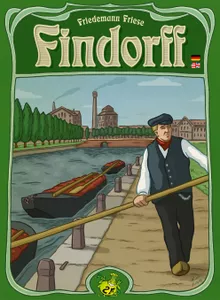
    1. Findorff

    Findorff board game box

    BGG: https://boardgamegeek.com/boardgame/360617/findorff

    Designer: Friedemann Friese

    What is the game about?

    Set in Findorff, Germany, the game is essentially a race engine builder game where players build brick, rail and peat factories so that they can eventually buy cards from their hand, which requires brick, rail or money.

    Players race against time, as action’s may result in rails being placed onto the board, which is the game’s internal timer; and it can race up on you very quickly.

    Using a personal player rondel-like mechanic, players select 1 action; and perform said action depending on how many times they can execute the action.

    At the end of the game, players score up their cards constructed, materials collected in their storehouse and remaining money to get an end-game victory point score.

    What I like about the game?

    The pace. Its an incredibly fast game. You can easily play this in 45-60mins, if not sooner (dependent upon players). As soon as you do your action, it’s your go again!

    I also like that you can quickly pivot, but you must be careful as buildings can easily become very expensive, very quickly.

    It’s also very easy for new players to pick up and play. Except for some cards where its not immediately clear how they work, the rest of the cards are pretty straight forward to understand.

    Things I did not like:

    All cards in the game are worth 50VP each, and it seems like not all cards are balanced. Some cards are very cheap to build, whilst others require multiple resources. There is a card that cannot be built until card number 8 is built; and the card number 25 has to be built/purchased multiple times.

    The tiles that represent constructed buildings, placing them on the board, do nothing in the game. There are some outliers, and 99% of the building tiles have no game effect. Also, there is no logical numerical ordering in the way they are placed on the board. I wish the UX of the placement of numbers was more logical, rather than having players having to find them.

    Other than producing money and consuming peat, houses do nothing in the game. There is a weird rule where it states you place houses on house spots on the board, until that is when they are all full; then it says just place them anywhere — where they sit on the board has no effect; it literally does not matter where the house is. We play with the rule you just group them in front of you.

    There isn’t much variability in each game. You get about 25 cards in the game, and you see pretty much every card in every game.

    The board is very big, and a majority of it is not used.

    Things I would improve:

    The game really needs more cards, more variability

    I would have liked to have seen the cards grouped or staggered. So, some cards would be 15VP, 35VP and 50VP; where there are more 15VP and 35VP cards.

    I would have liked to have seen some strategic decision about where you place houses on the map. Put them in the North for more peat consumption, put them in the South to sell bricks for money; etc.

    Overall, I really like Findroff; it’s very fast, easy to play. I just wish there was more in it.

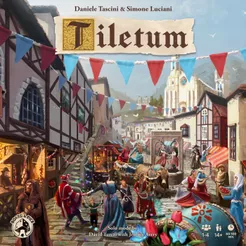
    2. Tiletum

    Tiletum board game box

    BGG: https://boardgamegeek.com/boardgame/351913/tiletum

    Designers: Simone Luciani, Daniele Tascini

    What is the game about?

    Set in Tiletum, Europe around the middle ages (I believe), players draft dice to take actions that relate to taking contracts, resources, moving their merchant wagon, moving their architect, building cathedrals and other sundry actions.

    Why do I like it?

    The game is very interesting, players draft dice for their colour and pip value; the colour relating to a resource, and the pip value is the amount of resources you get. Then, players get a number of actions which is the inverse number of the pip value.

    So, for example; if you took a 6 value die, you would get 1 action.

    In addition, there are lots of little combo’s players can trigger.

    You can make long-term, short-term plans; however, you may get scuppered if the die you wanted has been taken.

    What I don’t like about it?

    The game may take a long time to play with 4 players.

    It’s been stated on the BGG forums that the first player has a big advantage. I haven’t noticed it yet, but I can understand why its been stated.

    It’s been stated on the BGG forums that advancing up the King track can be very powerful, and if you then further combine this with contract actions; then your position cannot be competed against — however, I haven’t noticed this.

    Things I would improve:

    Player’s get powers, like the designer’s previous game Voyages of Marco Polo

    Player’s get different starting powers and positions; there is a mini expansion that does this – and changes the way you play the game.

    Perhaps more maps.

    Overall, having played Tiletum four times now, I’ve really enjoyed the game.

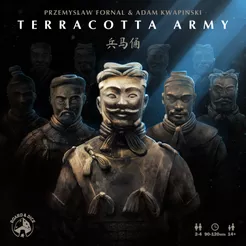
    3. Terracotta army

    Terracotta army board game box

    BGG: https://boardgamegeek.com/boardgame/350458/terracotta-army

    Designer: Przemysław Fornal, Adam Kwapiński

    What is the game about?

    Players try to construct the famous Terracotta army statues and place them within the tomb in such a way that they score victory points.

    Players use a 3-layered wheel in a rondel like display to take up to 3 actions; and use the benefits and outputs of an action to construct statues, position them in the tomb and try to score victory points or meet conditions to score end game goals.

    What I liked about it?

    It is very tight, and also focused specifically on constructing the statues; there isn’t any side game – and so, you can focus your attention on long-term strategies about what resources, actions you need to take and try to mitigate against rivals taking and blocking actions you wanted.

    What I didn’t like about it?

    During the game, players can rotate one of the wheels one space. This change of state can really hurt the player in last turn order position.

    Further, the amount of downtime, and AP can be very long. Having only played it at 2 players, I cannot imagine what the AP is like in a four player game. I found it to be very painful.

    What can be improved?

    I’m not sure. I found the game to be very interesting. There are some minor actions that could be better. For example, there is only 2 ways to get a skill token. I believe that there should be a third, which is perhaps quite expensive; but is available to all players.

    Overall, I enjoyed the game; though the AP and downtime may be very frustrating for others.

  • A few days with Go

    This week I have been dabbling into the foundations of the Go programming language. I’ve been hearing a lot about it, and decided that I wanted to do the absolute foundations, and not try to jump straight to building the next killer app.

    I’ve been following the online Go lang book and one or two basic introductions to the language from Youtube videos.

    My main motivation for learning the basics of Go was because I felt I needed to get back into programming, having not done it commercially for a number of months.

    I have done some basics, like learning how to do variables, for-loops, basic structs, functions, outputting to the terminal. I have yet to learn how to create tests, and I’m still uncertain what I will use it for.

    My initial thoughts on the language are that its reasonably okay to learn, it isn’t as straight forward as it likes to advertise itself with.

    I still prefer Swift.

    Yes, they are designed to do different things, Go is like an updated C and is more concerned with the compiled high-level programming side; the kind of things you might expect from desktop or more critical infrastructure; whereas Swift is aimed at getting developers into making mobile apps.

    They solve different problems.

    So why learn it? I wanted to give it a go, and I’ve been hearing a lot about it from forums, Youtube videos and I want to show that I am constantly learning, even if it just doing introductory steps.

    Whilst I do not consider myself an expert in all things Go; it is something I will keep a watch on, and will try to continue to do little bits to learn it.

  • 7 ideas for making YouTube better

    Over the past decade YouTube, the biggest video sharing website, has seen an explosion of content creators and regularly attracts millions, if not billions, of views across the world.

    For creators YouTube seems to have completely replaced blogging, and is fast becoming the first thing people use for solving problems; video communicates way more than a blog could – in addition, it connects an audience to a specific speaker, further consummating the creators identity into a brand.

    Whether it’s how to make a curry, fix a broken appliance, learning how to do code, or doing any other task, Youtube has changed the way that brands and content creators think about their content strategy.

    I decided to speculate on 7 ideas that could make Youtube even better in the future:

    1. Shops / Commerce : I could very well imagine an ecosphere where creators have their own shop, e-commerce platform inside their YouTube channel
    2. Battery life – One of the big challenges I see is that on Google Chrome, video playback and delivery consumes a lot of battery life on laptops and mobiles; it’d be cool to see if improvements browser could help with speed and energy demands
    3. Edit your Algorithm – I can imagine seeing the same content over and over again can be frustrating, or seeing content you would like to see more of; thus, a way to edit your algorithm to promote content or filter it to your needs; improving discovery tools would make it easier for users to find new channels and videos that align with their interests and viewing habits.
    4. Improved comment moderation – One of the biggest issues on YouTube is spoof accounts, bots, and clones of accounts trying to steal content. I would like to see better comment moderation tools to reduce spam, abuse in the comments section and have better way to alert users to spoof accounts publishing comments to harmful websites; this would make it a more positive and engaging experience for users.
    5. Better accessibility features – Improved accessibility features would make YouTube more accessible to users with disabilities; this could be co-created at scale with users with disabilities, charities and other, similar organisations.
    6. Copyright enforcement – Improving copyright enforcement would help to protect creators and rights holders; allow users to escalate. In addition, mitigation against those users seeking to weaponise copyright strikes for their own ends.
    7. Greater transparency and accountability – Greater transparency and accountability from YouTube regarding content moderation, demonetisation, and other policies would help build trust with users and creators alike.
  • Why 2023 is the year of AI

    It’s official. 2023 is the year of AI. ChatGPT, Bard, Autopilot, and others have changed the game of content, writing, coding, graphic artwork, research, and more; and is speculated to have an impact on jobs. Indeed, the ‘Godfather of AI’ Geoffrey Hinton quit Google due to its possible impacts.

    “According to Next Move Strategy Consulting the market for artificial intelligence (AI) is expected to show strong growth in the coming decade. Its value of nearly 100 billion U.S. dollars is expected to grow twenty-fold by 2030, up to nearly two trillion U.S. dollars”

    Source: https://www.statista.com/statistics/1365145/artificial-intelligence-market-size/

    Having used only the free version of ChatGPT myself, I’ve found the tools to be very useful in researching ideas, writing and it certainly has uses. Bard, although I’ve heard it isn’t as restrictive as ChatGPT, I found to be quite woeful in its accuracy.

    For example, I was undertaking research about the early railway development in the North East of England and wanted some information about newspaper headlines and consulted Bard; it told me that was there no newspapers published in that time, but I knew that they did. When I further enquired about the actual newspaper and when it was first published; Bard told me, the result of which completely contradicted what it said in a previous answer!

    The net result of this is that results, should be checked. You may wish it to consolidate academic research and summarise the reading, but you should check that its not only reading the correct papers, but that its actually making a summarised assessment.

    Inaccuracies, false data, mis-information, algorithms are perhaps the least of the issue; the impact it is already having on jobs will no doubt continue for the years to come.

    Some organisations may try to ban the bots, crawlers or signatures from such programs, and there may be other tools that try to identify whether an item is AI or not; thus, it will be interesting in the years to come whether AI will be “regulated”, though what that term actually means in real-terms is anyone’s guess.

    I do think new economies will be created out of AI. I’m also interested to see what, if any, push back from consumers will be – will they reject artwork created by AI, will they care? Will they pick and choose companies that have human interaction, people at the helm; or will they always pick cost?

  • Latest Updates and what’s happening next

    I haven’t written a blog article in many months, and I wanted to give some outline of what my latest update and changes will be happening this year.

    Goals

    • Create a writing schedule of posting 3 articles a week
    • Move hosting and content to a no code solution by September this year
    • Increase the quality of content created, possibly closing or moving blog content elsewhere.
    • Create digital products that leverage my own expertise, research and learning.

    I’ve been investigating various no code solutions for hosting content, for three main reasons:

    1. Security and maintenance
    2. On-going hosting costs, including SSL costs
    3. I only want to focus on writing content, not managing the site

    One of the things that attracts me to no code solutions is that they are very easy to manage, you don’t have the headache of security issues that seems to plague tools like WordPress and finally, I just want to focus on writing; managing the site just isn’t fun.

    I want to focus my attention on my learnings and expertise when it comes to design thinking.

    This will require me to archive this site when the time is right.

    Thanks now.

  • Moving hosting

    I apologise for not updating my blog as much as I’d like to, but recently I’ve been rethinking whether or not I need a blog, whether or not things like medium, substack, twitter, youtube and other platforms have actually disrupted blogging.

    I am intending to move hosting, or just push everything to a free hosting site such as the official wordpress platform as I’m finding it increasingly frustrating how poor security is with my current host is, but also with the WordPress platform in itself. I’ve been looking at JamStack, or using a static site generator, or something similar where security is first, I can post without worrying about attempted bot attacks on the site.

    Another issue I’ve been looking at it is what is this site meant to be, is it my own personal thoughts or is it a lead-in to get some sort of sale or appointment. I think the two things are different. They are different brands, different channels and have different goals, and thus looking at alternatives at how the content I create (or lack thereof) can be hosted.

    I’m hopeful I can get something sorted very soon.

  • No code: A game changer?

    For many years web site owners may have had to go to expensive web designers, web developers, e-commerce specalists to craft their next winning website. Whilst this trend isn’t really going away soon, there is a trend that suggests using no code tools may offer a cheap, fast and effective way of prototyping, testing and launching new products.

    What is no code and why should you care?

    No code relates to the idea of leveraging software tools to create digital products, content without knowing how to program.

    It is seen as a game changer, as it fundamentally shifts power away from web creatives to the consumer. Further, it offers the potential for new product ideas to be created, and validated really quickly.

    For myself, I am looking at using Notion or GitHub or JAMStack tools for hosting my primary website as increasing costs and security risks are my main concern.

    Don’t develop the value chain, leverage it

    If we look at the value chain of a digitial product, it could be characterised as:

    Content creation > Generating demand > Capturing Demand > Customer Service

    Here are some cool ideas for each layer.

    1. Content creation

    Sketch, After Effects, Figma, Keynote, Premier, etc

    2. Generating demand

    Instagram, Twitter, Youtube, LinkedIn, HypeFury, Creator Studio, Substack, Notion, etc

    3. Capturing demand

    Calendly, Shopify, Webflow, Stripe, Gumroad, Product Hunt, AppSumo, Reddit, etc

    4. Customer service

    Zoom, Loom, Keynote, Slack, Whatsapp, Google Workspace (formly GSuite), Microsoft Teams, Trello, MightyNetworks, TrustPilot, etc

    Summary

    If you want to quickly validate your product idea quickly and at at scale, then no code tools can offer you a quick path at any part of the value chain.

    Other resources to check out

    Product hunt:
    https://www.producthunt.com/search?q=no%20code

    100 No code resources:
    https://trello.com/b/A4OmiAWb/100-no-code-resources

    No Code Founders:
    https://nocodefounders.com/

    The future is no code (E-book and Interviews):
    https://www.adalo.com/the-future-is-no-code/intro

    The guide to no code marketplaces:
    https://guides.everythingmarketplaces.com/

    WeLove NoCode showcase:
    https://welovenocode.com/showcase

    No Code MBA (Learning):
    https://www.nocode.mba/

  • The difference between innovation and invention

    Innovation and invention. From the outset, they look very similar; and often the words are used interchangability – but is there a difference?

    What is innovation?

    Innovation is great ideas realised.

    Dr Nick Spencer, Northumbria University

    It’s the churn of creation, development and implementation of a new product, process, service or intervention with the aim of positively impacting a stakeholder, a situation, a context through improved efficencies, effectiveness or competitive advantage.

    Innovation, generally, is seen to sit within 4 areas: Incremental, Sustaining, Disruptive and Radical; as per:

    Source: Viima (2019)

    A common meme on the subject,

    Innovation = Invention + Commercialization

    Source: MIT Technology Review and Kenneth Morse (founder and managing director of the MIT Entrepreneurship Center).

    Of course not all innovation is necessarily commericalised. It could be an internal processes, intervention; or it could be framed through a charitable or voluntary interaction.

    Regardless, innovation can give organisations the edge in a given situation or context, be it a new market, new product, new service, new processes, new interventions or interactions.

    What is Invention?

    According to the Cambridge dictionary, invention is defined as:

    something that has never been made before, or the process of creating something that has never been made before.

    Source: Cambridge online dictionary

    And according to Wikipedia,

    invention is a unique or novel device, method, composition or process. The invention process is a process within an overall engineering and product development process. It may be an improvement upon a machine or product or a new process for creating an object or a result.

    Source: Wikipedia

    So, what is the difference?

    Invention is about creating something new, whilst innovation introduces the concept of use of an idea or method for a given context or situation.

    Invention infers something “new”, whilst innovation infers an improvement, or contribution to an exisiting product, process, service, intervention or interaction.

    The main difference could be the pressure for organisations to been seen to creating something wholley new, when quick, innovative wins can be equally as positive.

    My take on the difference between innovation and invention

    My take: Innovation and invention aren’t necessarily seperate, some examples like the iPhone are both an invention and offers innovation through its design, user experience and leveraging other inventions and features.

    Inventions can be protected through intellectual property and patent procedures, whereas innovations may not hold the same weight in a court of law.

    The microchip is an invention; however, the Pentium chip or Intel chip are examples of innovation. However, the microchip in itself is an innovation on previous inventions such as the telegraph.

    Another example: the car is an invention, but innovations may tackle the underlying reasons behind why a car is needed or may offer transport options.

    My take is that innovation and invention are really part of the same thing, to positively discover, develop and deliver new ideas and bring them to market.

  • Thoughts & Notes to a future Multidisiplinary Innovation student

    Since completing my Masters in Multidisciplinary Innovation at Northumbria University (link) back in 2018; I’ve been approached by prospective students asking me – What is the course like? And of course, the more interesting question; is the MDI course worth it?

    Since completing the course; I’ve had a number of times to reflect back on the key insights and lessons I’ve learnt from the course; had time to digest on what I liked, and what I perhaps have critique of; some of which I will share in this blog post.

    My original motivations for doing the course was that I needed to shake up my career. Having spent the previous few months unemployed, getting nowhere with interviews and job applications; I felt that my own skills needed upgrading. In the fast paced world of computing, coding and software development, it can be very easy to be left behind if you are not constantly improving, pushing out a product.

    In some ways, being in the chair of a web and app developer; especally in those early days of pre-2018, we perhaps didn’t get a good chance to ask why? or what problem is it solving? To the owner of the business it was a sale, transactional, and the faster we got it out, the faster we got paid. We got paid on results, on outputs, on artifacts, not on outcomes.

    Further still, I felt that the world of concrete transactional websites and apps seemed to miss something; a clarity of why, who it affects; and all the work that needs to be done before a single line of code is written. In short, the value. The value to society, to the end-user, the business, how it reinforces innovation and marketing efforts and keeps businesses competitive, but has an interplay outside the scope of the transactional into the transformative.

    This may sound incredibly fluffy. It did to me before the course; but having since completed the course, it did open my eyes to the prospect of the three main spaces: problem space, solution space, market space and how innovation isn’t necessary a medical product, or a new invention; but could be framed through design.

    If we imagine innovation as two primary world spaces, the world of exploration and exploitation as best described by Alex Osterwalder (@AlexOsterwalder) in his book Invincible Companies; then the former (exploration) is where MDI sits; it looks through ideas, themes, design briefs through specualtive, explorotory work; however this does not mean that students cannot test ideas with either offline or online customers (there were times that we did this).

    This can be difficult to process for many, I found it quite hard to grasp at first; having spent most of my career (as many do) in the world of the concrete, or as Alex Osteralder describes it, exploit; then it can be hard to put yourself in positions where you don’t need to get it right first time, that its okay to explore ideas without first putting constraints on it. It was difficult because I framed everything through the lens of business cost first and mitgitating risk.

    This is where I feel the MDI course sits, and plays well in; the idea of exploration, speculative; but also through framed experimentation, students can test ideas and then create a provocation to a client.

    Most of your time is on live client work, working in teams; using techniques as diverse as project management, strategy, design, scoping, pitching, crafting documents and reports; it is similar in scope to a design consultancy, but also has themes of a management consultancy, or an agency.

    To this end, I feel it is important to note that the course is NOT a traditional course in the sense of academic theory, exams, etc; but rather, its about the discovery, weight of argument, and reflective learning garned through the course.

    To reinforce this point; I thought I’d reflect on an email I recieved some time ago from a propsective student who wanted to do the course, but wasn’t sure whether it was worth it. Rather than posting the full email, I thought I’d share the most important insights.

    What do you do on the course?

    Its a 12-month course, aimed at a wide range of people, and you use design-led innovation working on live client projects, building up a portfolio, and your objective is to deliver innovate ideas, thoughts, provocations, solution drivers for those projects; work in teams, use strategy, ideation, design thinking, agile practices, pitching, presentations.

    It is more about the process than the outputs. Its more about the lessons and insights you learn about yourself, about the problem space, of continious improvement and how you worked with others, including the client.

    Does it have exams, how much theory is it?

    There are theoretical lessons, though we didn’t take exams. On a side note, even though the course has project management; do not expect a certification in Prince, Agile, SCRUM or indeed any other formal certification to support your exit from the course. If you require a professional certification, I would recommend a different route.

    It is mostly self-directed; I think it’s important to underscore this — it is self directed; are you comfortable with this?

    For some it can be a bit of a shock to move from a traditional top-down teaching approach to self-directed style; in this way, the teaching and academic “hand-holding” is light touch.

    Practally you will be exploring all sorts of live client facing projects in different domains. One week it might be a charity another time it’s a major utility company. Each has its own unique challenges.

    So is it a UX course?

    No. Its not a UX course. There is UX in it. But it is not directed, taught. There is nothing to say that you cannot learn UX, CX; in fact you should be; and then test the ideas of CX, UX on the project.

    Further, you can use your experiments to form the basis of your reports.

    Will I learn Photoshop or [Insert tool of choice]?

    No. Again, it’s not about tools. Its about the process. However, that does not mean you cannot learn Photoshop or, whatever tool of choice. In fact, you may be in situations where you have to learn it, and fast; this is where you learn the most about yourself.

    Why should I do this course?

    Your reason for doing the course will be different to mine. For me, it was about refreshing my career opportonities, getting a fresh perspective on my domain; understanding that I can leverage my abilities in discovery, finding unmet needs, or using constraints to test scope. I found this the most enjoyable.

    As always with courses it’s really down to you, your reasons, your goals and where do you want to be and who do you want to be.

    General advise

    Watch the videos on their site, check out testimonials, case studies, do a virtual tour; ask previous students what they got out of it, what pitfalls to look for, what they didn’t like; then ask yourself is it for me?

    Be creative in the delivery

    So when you create your delivery work package to the client or whomever it might be; try to be creative and break the cycle of death by powerpoint. Want to make a newspaper, go do it? Want to make a video of the problem, go for it. Want to present the ideas in a comic? Go for it!

    Get outside the building

    To quote Steve Blank, “get outside the building”; by this I mean, its very easy to be in the bubble of your group and think “we got this”; its hubris, and you should try to test it — this could be with interviews with the public, online surveys, facebook groups, graduates, industry, you name it.

    I would like also to add to this that you should try to make connections with industry; go to events, introduce yourself, the team, MDI, etc. It could be your ticket to a job, or at the very least gets you into doors for your final presentation.

    What are the pitfalls?

    I think its three-fold. One is yourself, your confidence in your own abilities, not necessarily self-image, but being able to push yourself to complete the task; job at hand, to take it seriousily, to learn, to identify when your getting “hot” and being able to identify areas where you’ve grown.

    Second, I would say is working with a team, this can be very hard to do and you may spent most of your time managing relationships within a team.

    Third, is managing expectations of the client, of the people you present to.

    You mentioned there are critiques of the course, what are they?

    My views are based on my contextual background within computing / software development and my expectations of what the course could and should be looking at.

    So, I felt there wasn’t enough exploration of new business model frameworks; such as the Amazon flywheel model, or what is disruptive innovation; how do you know when your business is disruptive, and what are the materials needed.

    There was a lack of theory; but this is so you can do client work. I recall my past software engineering course had 3-4+ hour lectures on C++; there is nothing like that here.

    I wanted more stuff from the insights from product / tech startups, what is product ownership, how did these organisations become successful; I did spend some time reading up on it, so it wasn’t really my expectations of this were not within scope of what the course could realistically offer.

    Finally, since leaving the course; I’ve found it quite hard to explain to prospective employers what we actually did, why its relevant to them; part of this reason is that employers are in the world of the transactional, the concrete, or; to put it more bluntly, in exploit mode. So it can be hard to explain to them why they should hire someone who is more interested in exploring the why, the what, the impacts and unintended consequences, or how design can be used to reframe the problem space.

    To add to this, I’ve found a number of innovation roles require some level of certification, be it Prince or SCRUM; so please bare this in mind.

    So was it worth it?

    For me, yes; It was worth it; but at the same time, I wish I had more — more lectures or theory on the things I’m interested in, especially from the current high tech space (be it how Amazon works, how NetFlix disrupted Blockbusters, etc); more chances to test ideas with the public.

    Also, I missed chances to explore what commericalisation of innovation looks like; what is presented to investors, etc.

    Regardless of these gaps, It did show me that I do enjoy the explore side of things much more; and I feel MDI can be worthwhile for any prospective student, however; if you feel you need a hard science masters, then it may not fit your requirements.

    As always, I would advise try to do a bit of due diligence on any course.

    Good luck.