I’m announcing my return to Swift iOS development and now offer consultancy on projects.
I’ve been working in innovation, but I wanted to return to iOS development and will be publishing some new apps over the next few months.
I’m announcing my return to Swift iOS development and now offer consultancy on projects.
I’ve been working in innovation, but I wanted to return to iOS development and will be publishing some new apps over the next few months.
Sometimes when we get a new design brief from a client, it can be difficult to know where to start.
I sometimes use the 5Ws framework, which stands for
Sometimes I will start with 5 boxes, each with their respective title and fill each box with post-it notes. The starting frame is the design brief, or business challenge.
We should aim to ask why questions, “Why does this problem exist?”, “Why do this challenge at all?”, “Why is this valuable to the client or customer?” etc.
What asks state questions, such as “What is the goal?” “What are we trying to achieve?” “What does it look like?”. Sometimes its fun to conjoin others such as “What happens when we do X and why does this matter?”
Where is all about place (not necessarily location); “where is this problem occurring?” “where should we start fixing the problem”, “where in the world (geography) will this problem impact?”
When is all about time, “When should we start?” “When should it finish? When does the problem start?”, etc.
Who is asking about people (but it could also be more broader); such as “Who is responsible?” “Who will this benefit?” “Who will this impact?” “Who does this person report to?”, etc.
There are other ideas I’d like to throw into this mix.
Sometimes I like to ask on a project: “What do we know?” and “What is the client asking for?” as two starting points; this is asking, what do we know about the project, the client, the landscape, any research, or trends. It’s meant to capture the team’s current understanding, knowledge but also highlight possible gaps.
It is not necessary to know everything. It’s not aimed at blocking the project from moving on, its simply making a case or statement to say “This is what we know about the project, the goals, the world it’s living in, our knowledge of said subject”.
This concept is similar to Sun Tzu’s Five Factors of Purpose, Landscape, Climate, Doctrine, Leadership, Territory. Though I will usually leave out doctrine, leadership; as sometimes its not possible to know these ahead of times.
Other additional ideas could be: “What do we think the biggest problem/challenge is?” and if necessary, add some kind of justification. This should also spur an activity to reframe the problem.
Also it is useful to look at the quick wins, blockers and enablers there are on the project?
If we combine these together, a simple framework for this could be:
The above is a work in progress, but I think its a good start for any project to try to combine the 5Ws with their own internal processes to understand business challenges, and how to tackle them.
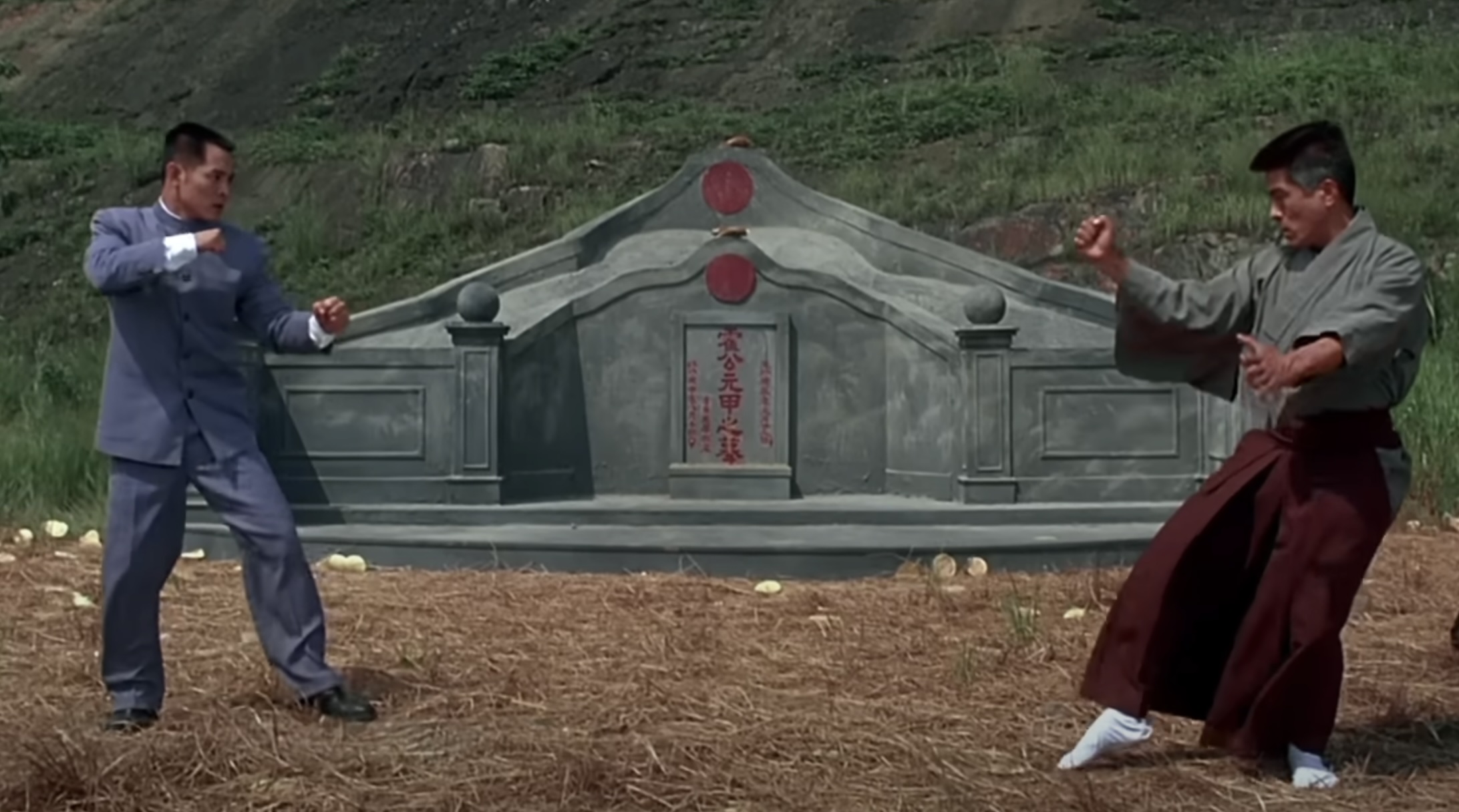
Fist of Legend (1994) remakes Bruce Lee’s Fist of Fury (1972) and sequences from this movie inspired other movies. For example, the early fight sequence in the dojo inspired The Matrix’s training sequence between Neo and Morpheus.
I don’t intend this article to be a review of Fist of Legend (1994), but I do wish to explore this one on one fight sequence which I think is the best one on one fight sequence in the movie.
The fight sequence in question is Jet Li vs. Yasuaki Kurata
So what’s the score? Kurata plays Fuimo Funakoshi a Japanese fighter who also is the Uncle to Li’s Japanese girlfriend Mitsuko Yamada. In this fight, Fuimo has been ordered by a ruthless Japanese General Fujita (also known as “Supreme Killer”) to enter into a fight and kill Jet Li’s character Chen Zhen.
Fuimo is thoughtful, and doesn’t like being ordered around by Fujita. He suspects Fujita represents a new breed of Japanese soldier who talk of honour and the warrior spirit; but only use it for political gamesman ship and reluctantly agrees to the order.
What I like about this fight is how Fumio almost immediately breaks Jet Li’s rhythm by “warming up”. By the time Jet is ready to fight, he’s almost bored until Fumio launches an all out attack.
It’s the storytelling in this fight sequence that I enjoy so much.
Whether it’s Fumio’s chat with Li during the fight, or how he learns to adapt and leans into this adaptability as the fight continues.
The dialogue post-fight shows Kurata’s character’s wisdom and understanding of hand-to-hand combat, as well as his great respect for Chen Zhen and his master, it gave a lot more depth to the fight itself.
Although depending on what version you are watching, Kurata explains that a gun will always beat a person regardless of how skilled they are; or if you watch a different version Kurata explains that if you learn to become adaptable then you can become unbeatable.
For me, there’s a lot to learn from this sequence and this dialog.
The trouble is, in high stressful situations, it can be easy to forget and sometimes hard to execute on.
So long as we can move one step forward, that is good enough.

I like playing strategy games.
In June 2024 I wrote on LinkedIn about how I attended the Northumbrian Water Innovation Festival and participated in a gamification activity around the water industry and how this inspired me to create a serious game prototype that could help the water industry gamify strategy.
Read my Linkedin article: How serious play can help the water industry plan for the future
The idea was to have players make active, strategic decisions about whether they should prioritise on water demand or innovation initiatives.
This prototype took a lot of the ideas from the original version, and captured it into game mechanics using tracks, repairing old infrastructure, addressing climate issues. There was a lot going on.
Having play-tested the game, I realised it is too unwieldy.
So, much like a sculptor, I decided to cut away; and focused it only on 3 core aspects:
The game is played over a serious of rounds and players work co-operatively to move water from the reservoir to customers homes in an efficiency puzzle where the nodes of the water system are represented by D4 dice, and represent water throughput.
Customers will pay for supplied water and the players can use the income to focus on near-term threats or invest in R&D for climate change issues that will impact customers in future rounds of the game.
Decisions made in the game will impact consumer trust, shareholder trust, income and climate (which can only be slowed down).
Sewage in the sea is a serious concern, and I wanted to try to model this; so players are placed in the situation of whether they should deal with sewage through legal and illegal spills as per this article on the BBC news website: https://www.bbc.co.uk/news/explainers-62631320
I’m calling on UK water companies – Northumbrian Water and others – to dive into a unique opportunity. Let’s walk through a round or two of this water industry game prototype and learn how I might improve the game to reflect real world issues and explore the role analog gamification can play in shaping strategy.
This isn’t just about playing a game; it’s about uncovering insights, solving real challenges, and thinking differently about the future of water management.
If you are in the water industry and want to learn more, DM me and lets see what we can do.
By the way, a printable version will be published online in the coming months, so stay tuned!
Could your business benefit from modelling scenarios through engaging, analog gamification strategies?
If this sparks your interest, I’d love to explore how we can apply gamification to create impactful solutions across industries.
Let’s connect on Linkedin or DM me and let’s start a conversation!
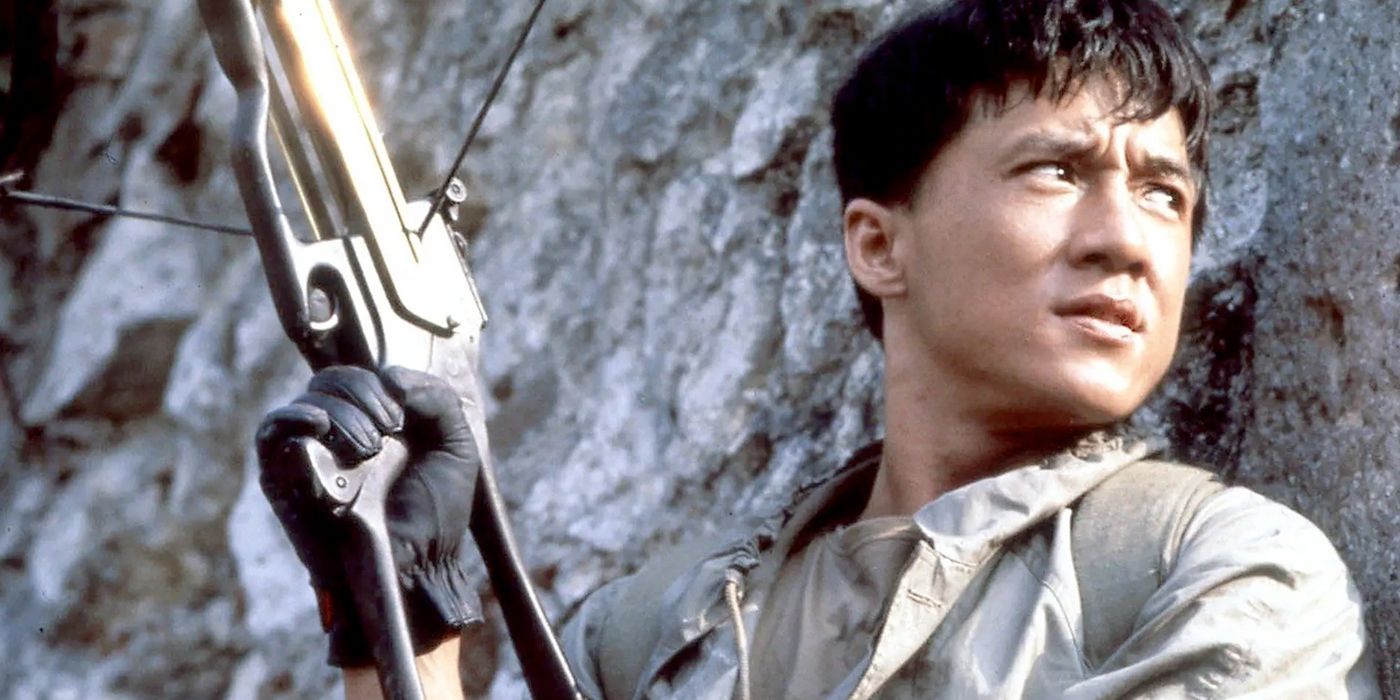
I think I must have been in my early teens when I first saw Jackie Chan’s Armour of God (1986). I vividly remember picking it up from the video store with my father. This was at a time when we used to go to the video store every week to rent out another martial arts action movie.
One week it was Bruce Lee, another week it would be another martial arts movie. I seem to remember the fortnight or so before we rented out Armour of God I was getting a bit bored of watching Bruce Lee knock off movies or some crazy martial arts movie where the plot didn’t really make sense or the characters were so one dimension and flat that it sucked all fun out of the movie.
That was until I saw Armour of God. I was really impressed me. I seem to recall rewinding the movie at least 3-4 times to watch the movie again. It made such an impression on me I would end up buying the VHS movie, tried to learn a little Cantonese (which I wasn’t very good at).
So, I decided recently to rewatch it. Purely out of nostalgia for a time long since gone.
Nostalgia is the major reason why I like this movie. Even, on reflection, if it isn’t on the par of his other movies.
The movie is a nod and a wink to the Indiana Jones movies with Chan’s own spin. Chan plays a modern Indian Jones character “Asian hawk” who steals artefacts, principally to sell them at auctions.
In this movie, he steals one of the pieces known as the Armour of God; except he gets targeted by an evil cult who intends to blackmail Asian Hawk into bringing together all five pieces so that they (the evil cult) can destroy them. They intend to blackmail Hawk through kidnapping Rosamund Kwan’s character Lorelei (Laura).
The film starts incredibly briskly. Within a few set pieces we see Asian Hawk steal one item, then we cut to the evil Cult discussing how to blackmail Asian Hawk, then we cut to a really fast-paced sequence set at a fashion show where Rosamund Kwan gets targeted and kidnapped by Monks armed with Kalashnikovs storming the catwalk; positing a level of danger that I don’t think we see from the rest of the movie.
Along for the ride is Asian canto-pop star Alan Tam who is mostly a comedy side-kick and his character is part of a love triangle story angle which drives some tension between Alan and Chan’s characters; though whether he is a good substitute for fellow action stars Sammo Hung or Yuen Biao is up for discussion. I feel he is ok.
Regardless of the questions about his fit with Chan, I find a deep nostalgia for the songs that Alan Tam brought to this movie. Whether it’s the cantonese version of “A friend with mine”, the impactful rock song “Midnight rider” or “Lorelei” — it brings back memories of a different time; it’s something I don’t think any of his other movies did.
Action sequences in this movie are a plenty. The opening sequence with the strange cult, the car chase through the streets of Croatia, the fight sequences with the monks and the final fight sequence with the four Amazon women.
Of course, most movie reviewers will know – Armour of God is the film that came closest to killing Jackie Chan. As seen in post-credit sequence, Jackie performs a stunt where he grabs and holds a branch; except it breaks and he ends up in hospital and severe injury to his head; and according to an interview he did some years back with Jonathan Ross, he still has suffers from to this day.
The fight sequences are really good. The multi-man fight sequence with the monks is peak Chan. There was a period of time where he was known for this multi-man fight sequences, and I even remember this sequence even made the documentary “Cinema of Vengeance” (1994).
And of course the fight sequence with the four Amazon women. Whilst its clear that most of the women are replaced with Chan’s stuntmen, the sequence is still funny, fast and a little bit dangerous to Chan; who doesn’t quite know (at first) how to fight women who constantly aim at his crotch.
I seem to remember reading somewhere that Cynthia Rothrock was picked to be the final boss; I still wonder to this day what that would have been like.
Looking back on the movie, I find some sequences are a bit odd and perhaps don’t connect with a Western audience. The sequence with the “Losers” band won’t make sense to a Western audience, its only when you find out it was a parody of a band in the 70s, then it makes sense. Other sequences are also odd. Why is Hawk given bitter, rotten cheese by Alan Tam; and he doesn’t like it.
A final stunt sequence I had odds with was Chan’s jump onto to an awaiting hot air balloon. Chan starts at a mountain side, then suddenly the film cuts with him being hundreds of miles up. It doesn’t really work.
Although that part where he jumps into the balloon paired up with the Lorelei music really adds weight.
Strangely, I remember getting annoyed at one of the Police Academy movies (it was probably 5) where one of the heroes jumps onto a hot air balloon and performs almost exactly the same stunt as in Armour of God. I guess Chan’s impact in America although not mainstream, was generating some interest.
So, does Chan’s Armour of God live up to expectations? I think the early part and late part certainly do, the fast introduction of the who-what-where and geography is really fast.
The stunts are good, and the fight sequences are effective. Whilst some plot points don’t make sense, and maybe it slows down too much and maybe it never ventures back into the danger heights that the fashion show gets to, and perhaps part of it just don’t make sense to a Western audience; and yet, it still has its charm.
I think overall, I enjoy Armour of God for what it is; and for me, its about nostalgia.
7/10
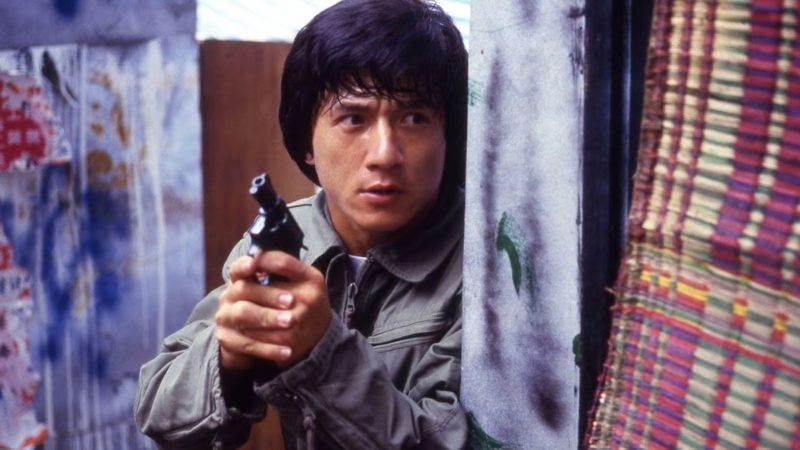
Christmas 1991. That was the first time I saw Jackie Chan’s Police Story (1985). It was part of a Channel 4 season of asian action cinema movies. It wowed me back then, and seemed to be head and heels over every other “kung fu” action movie that was around that time and spawned a personal interest in Hong Kong action cinema, which included collecting Impact! magazines and watching other films.
Despite seeing Police Story and its numerous sequels countless times, I’ve never seen it at the cinema.
The BFI’s nationwide season “Art of Action” gave me a fantastic opportunity to watch both Police Story and its sequel Police Story II, and I thought I’d share my review of both movies, and try to analyse which is better and why.
Sadly, neither were the 4K version; and the film quality seemed to be quite fuzzy in places; and I was a bit disappointed that they showed a slightly different version of Police Story II which didn’t have music for the playground fight, and had weird video edits of the first movie that I definitely remember weren’t in the version I remember seeing. Despite this issues, I’m really happy I got to see both films on the big screen.
Police Story (1985) directed and stars Jackie Chan and shared the screen with Maggie Cheung, Brigitte Lin and Yuen Chor; who himself was once a director.
Chan plays “Chan Ka-Kui”, a police officer trying to take down drug lord “Chu Tao” (played by Yuen Chor); but when the court case against Chu Tao fails; Ka Kui becomes framed for the murder of a fellow dirty cop and must clear his name.
The movie highlights a range of stunts, action and slapstick humour. Ranging from the opening bus stunt, which Chan performs himself; through to the finale, the iconic mall fight sequences; Police Story has a lot going for it.
It’s also well known that Police Story was made as a result of Jackie Chan’s frustration and dissatisfaction with The Protector (1985); and you can see it throughout the movie.
Chan’s portrayal of “Ka-Kui” is also different to the “I want no trouble” mode that Chan had in his later career. Kai Kui is volatile, and when pushed to boiling point; he explodes.
In addition, the movie film style is at times moody, especially during the iconic mall fight sequence. The way the film captures Chan seems unique and wholly different than any other movie that he starred in afterwards.
I also feel that Police Story is the most iconic of Chan’s work. There are so many movies that were “inspired” by Police Story. Whether it was Tango and Cash (1989) paying homage to the bus shootout sequence, or Rapid Fire (1992) (starring Brandon Lee, who himself stated in a few interviews that he was a Jackie Chan fan) which copied the motorbike through the glass sequence, or a clothes rail fight sequence. Then there is Bad Boys II (2003) which wholesale paid homage to the shanty town sequence.
There are also sequences which still intrigue me to this day. When Chan confronts his superior “Raymond Li” and rants at him; I often wonder what inspired this rant. I recall someone stating it was a reaction to the British empire, which at the time ruled over Hong Kong; and yet, I hear other sources that say it was actually a thinly-veined rant to movie directors who took liberties with stunt performers, and I’ve heard it was a rant on James Glickenhaus, who directed Chan on The Protector (1985).
Another sequence which also I recall having some commentary was the sequence where Mars is the fake knifeman in Bridgette Lin’s house; where I recall seeing somewhere that a Hollywood director wanted to remake the whole sequence in a modern movie; but then being rejected as they felt it wouldn’t work in today’s market.
Regardless of these two side areas, the biggest reason why I think Police Story is my personal favourite is the mall fight sequence. It’s action all the way, its dynamic, its moody, and the soundtrack really kicks it into another gear.
For me, Police Story (1985) is worth watching, despite some small flaws.
Police Story II (1988) has Chan returning as Ka-Kui; demoted to road traffic duties – where he is hounded by Chu Tao; who has been granted bail from hospital due to health issues. Ka Kui is considered reckless by his superiors and is bad publicity for the Police force forcing Kui to resign his commission, only to be brought back into the fold due to a group of blackmailing bombers.
I remember when I first saw Police Story II almost 20 years ago, but I always remembered I didn’t really like it. The mood isn’t the same as the first movie, it seems to be scaled back and not as ambitious as the original.
Further, I really didn’t like how Police Story II suddenly changes its plot almost half way into the movie to be about mad bombers, a theme I don’t think really has aged well in this post 9/11 world. It doesn’t help that the bombers aren’t doing all of this for political reasons, but for money. I just found the bombers in this movie to be quite drab compared to the villains of the original.
Ka-Kui is still volatile. Early on in the movie, Ka Kui runs across a highway to get into a restaurant and half way destroys almost most of it to get back at the villains of the original; and afterwards he sits down wondering if his own recklessness is consuming him.
There are also way more fights than the original. By far the best fight sequence in the movie is the playground fight, where Chan fights off a bunch of goons. The best version of this fight sequence is the one with the music overture; and not the no music version which I saw.
I also feel this sequel really drags, especially in the middle. We are introduced to characters, such as the taskforce, that only used a few times and we never see them again. There are sequences which drag too long, and the movie should move on.
The last sequence is at a dynamite factory. I just find this sequence to be a let down compared to the mall sequence in the first movie. The mall had Jackie fighting his way up; only having to come back down again, and he had to fight multiple competitors, in amongst a crowd of innocent by-standers — whereas, in this sequel, Jackie is fighting at best 4 guys.
The only interesting character of the bomber villains is the deaf mute character played by Keung-Kuen Lai (Benny Lai); his kicks are like lighting and his triple kick in mid air is amazing, even though the way they filmed it; it looks like he is on wires; when I know he did it for real.
The deaf mute character also uses radio controlled cars. I seem to remember reading in Impact magazine that Chan was upset that Hollywood had also used radio controlled cars in the Dirty Harry sequel movie “Dead Pool” (1988).
The fight sequence between Lai and Chan is interesting. Chan almost gets knocked out early, and its very fast fight sequence, with plenty of kicks. Chan gets beaten up quite a lot, until suddenly he remembers he is in a fireworks factory, and gets the upper hand – not from skill, but from using his brain.
I don’t really enjoy the fight sequence between Lai and Chan, but I can’t put my finger on why. In other movies Chan thought much bigger, stronger characters. In this movie Lai is physically smaller and shorter than Chan. Also, the way Chan disposes of Lai at the end just felt underwhelming.
The fireworks factory fight ends with the entire factory exploding, in what I remember to be the biggest movie explosion in Asia up until then; and I remember that Chan had brought in people from Hollywood to do it.
For me, Police Story is better of the two movies. Yes, Police Story II has more fights and a better, tighter character arc; despite dragging and changing plot near the middle. It’s because its culturally important; has a fantastic mall fight sequence, the grittiness, and even down to the music choices make it a better movie for me.
What problem are we solving?
In business, there’s no shortage of customer needs, customer problems to tackle.
Startups may have it easier, they focus on a single problem; whereas bigger organisations may have a multitude of problems they could choose from.
Picking the right one can be difficult; but can bring focus about what your going for.
We can choose a problem space using problem framing.
Problem framing is one of the steps of the design thinking process and involves defining or describing a challenge or issue at hand in a clear, concise, and actionable way.
Problem framing is particularly when you want to:
So here are five ways you might be able to use problem framing techniques to set the stage, and to help pick what problem to solve:
By framing the problem, you can:

I recently got asked “what is the most original idea you’ve got?”
I found it quite hard to answer.
Looking back, I wish I asked “can you please define original ideas”; or “what are the metrics we are looking at?”
I didn’t. I wish I did though.
Here is why I think it’s really hard to answer.
It’s hard to know what is original without knowing what the objective criteria is for an original idea are.
Is it IP?
Is it being first to market?
Is it being in a blue ocean? (IE: blue ocean strategy)
Is it original because you never heard of it?
Is it original because it’s the only one of its kind. Such as a work of art?
Is it something nobody has ever tried?
How would you even know if nobody has ever tried it anyway, wouldn’t you have to have access to all human knowledge, ever?
This is a perfect information problem.
I don’t know what ideas you have already tried.
I don’t know what ideas you have discarded.
I don’t know what ideas you didn’t follow up, on or ran out of budget pursuing.
I don’t know what idea sits in someone’s drawer, a notebook, or on a post-it note somewhere.
It is a black box, a collection of unknown unknowns.
Even with all the data, with a criteria; we as innovators must remember that innovation processes and co-design will often favour customer needs, even at the expense of being “original”.
Innovation should start with customer needs. Leading with empathy, to generate ideas and pick solutions to test our ideas with customers.
Regardless of your chosen method; all innovation methods will have a select or filter stage.
For example, the method of “dot voting” is a selection.
Another example is testing the idea with customers; where insights drive the next iterative cycle of your innovation pipeline.
This iterative cycle is actively seeking a “market fit”
Usually this “market fit” will based upon the feasibility, desirability, viability Venn diagram.
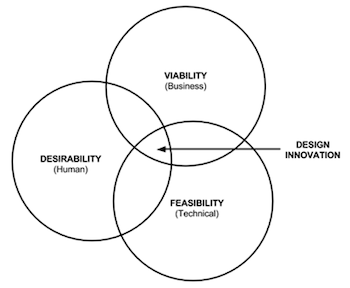
The bottom line is that selection stage will often filter out ideas, even “original” ideas; this is because customer needs matter more than whether its original.
The market only cares about perceived value from the lens of a customer.
To establish value, we can refer to the value proposition canvas;
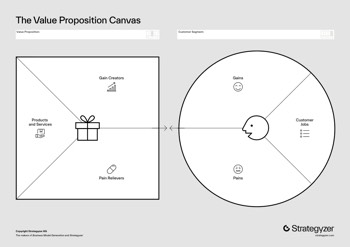
Jobs to be done
In the jobs to be done (JTBD) section, we list out all the jobs a customer wants to do.
Pain points, Pain relievers and Gain creators
On the value proposition canvas we look at pain points, pain relievers, products and services to create gain creators.
It’s customer’s perception of value that informs a customer’s buying decisions.
As innovators we validate value through testing products and services with customers; and through iterative innovation processes.
It is this iterative process that will filters ideas, even the “original ones”; in favour of solutions that actively solve the customer’s problems.
Meaningful innovation comes from co-designing with stakeholders, with customers; to actively filter, select products apply gained insights from iterative processes into products, services that actively aim to solve customer’s jobs and pain points.
This might mean your idea isn’t original or new; but it does solve a customer problem. And as a final point, if the solution does fit need and your lucky enough to hit product market fit, and it hits scale (mass market) to a point where customers are actively seeking out, begging for your product or solution – what does it matter if the idea was original or not?
Because, ultimately it is the market and customers that will decide whether your original idea matters or not.
What about your thoughts on this subject?
What was the last original thought you had?
What made it original?
This a review of the book “The 10X Rule” by Grant Cardone. This review is unpaid, and has no affiliate links.
I was surprised to find that “The 10X Rule” was at my local library and skim read the entire book in about 2 hours, took some notes and decided to check it out, and re-read it again.
Cardone argues that the key to your success is scaling up your thinking and actions by 10X. Under the 10X Rule, set goals 10 times bigger than the average, then work 10 times harder than average to achieve them.
He adds that people don’t approach success the right way. “First, they don’t set high enough goals due to average thinking. They don’t want to be unrealistic or risk failure, so they set seemingly attainable goals…” and surmises this into that it takes extraordinary thinking and effort to achieve extraordinary success.
The entire 10X rule concept into one sentence: Write big goals. Take massive action. Do the work.
There are however some useful reminders in the book, such as the tenants of
I felt chapter 22, success or unsuccessful has useful headlines to remind yourself to have a can do attitude, to focus on the opportunity, to have a “figure it out” attitude, to love challenges, to seek to solve problems, to take risks, be unreasonable in your vision and other phrases. Most of which I’ve added to my own Apple notes as reminders.
However, I do have some critiques.
The book is very repetitive and doesn’t seem to move onto execution at all.
It’s not until you get to page 70 where he outlines some examples of 10x goals, and it’s not until chapter 23 (page 187) where he actually starts talking about how to get started with 10x. The instructions are only a few paragraphs spread over pages 188, 189; where you write your goals and to rewrite your goals daily.
Most of the book is very useful, but there is little on the actual execution once you’ve done your goals.
Cardone’s approach in this book will not resonate with everyone. It’s aggressive, unapologetic and obtuse; which can be motivating for some but off-putting for others.
There is no doubt Cardone is a very polarising figure in the world of sales. His background, demeanour can be very off-putting to many, including myself. Whether its the psychological tricks garned from cults or scummy sales practices, or whether its because he contradicts himself from one video to another, there are valid reasons for the reception Cardone receives. Despite this, he has cultivated a significant following.
I take a more pragmatic approach: take what works and disregard the rest.
Although I was initially disappointed that the book lacked execution instructions, was repetitive and lacked any depth once 10X was explained, I did feel there were parts of the book that are actually good and act as useful reminders to anyone that they should not become complacent, that setting and regular revisiting of your ambitious goals and a keen reminder that you aren’t doing enough, and must push to chase your dreams.
Overall, my biggest take-away this book is volume, volume, volume.
Overall: 6/10.
This is a book review of IdeaFlow by Jeremy Utley and Perry Klebahn with a foreword by David Kelley. This review is unpaid and has no affiliate links.
Innovation for many businesses can be hard. For many, innovation sounds incredibly risky. There are no sure things in innovation, so why should any business take bets on things that may have no return on investment, especially when times are hard.
The premise of ideaflow is that the only metric that matters is how many ideas you can generate within a timeframe. It requires a collection of materials, facts, experiences, perspectives, data and less on anecdotes and analogy.
Written in 2022, IdeaFlow’s 300 pages discusses ideas of now only why idea generation is valuable, but demystifies a lot of the processes. It repeats a lot of similar discussion in Eric Reiss’ book Lean Startup. Indeed, you could even argue that IdeaFlow could be summarised and pre-appended to Reiss’ build-measure-learn loop.
On page 52 the authors argue that “what sets winners apart […] is volume. If you want better outcomes fill the top of your innovation funnel with many, many ideas for achieving them.”
So, how many ideas is enough? The book argues for a “2000-1 ratio”, referencing Bob Sutton of the design company IDEO. It lists an example of a toy manufacturer producing 4000 product ideas that eventually work its way through to 200 working prototypes.
In some ways IdeaFlow mirrors a sales funnel, or sales pipeline and fills the top of the sales funnel with say 2000 ideas to get to to 100 working prototypes, which are then refined further to 5 projects.
One of the case studies it looks at is Taco Bell, and how they generated 50 concepts a month.
This number may seem high, it isn’t uncommon. I recall speaking to a design lecturer who asked his students to come up with 100 ideas, and they couldn’t use variations either!
So, an initial seed is needed, then selection, then sleep; then solve. It argues to go analog, rather than digital and aims for quick scrappy tests; to continue to use curiosity to drive innovation, to create a portfolio of experiments, to create a pipeline of ideas, and to keep ideas moving through the pipeline, through validation, collection of data and funnel this back into the seed-select-sleep-solve process.
I really liked how ideaflow’s golden thread throughout was to amplify your ideaflow, to flood your idea with ideas, to build an innovation pipeline, then put your ideas to the test.
I really liked the idea of keeping a portfolio of frames (how might we), a portfolio of experiments and idea; though I was disappointed in how it doesn’t really describe or detail how to make a portfolio, and what the difference between a portfolio, a database, and an excel spreadsheet. Presumably, the portfolio are success’; whereas the others are just states? I’m not sure. I do wish it gave examples.
IdeaFlow doesn’t explore what its consider’s an idea. It frames that “every business problem is an ideas problem”, but it doesn’t explore what ideas are within the context of ideaflow. Just make lots of them, and throw them at the problem; that is, if you have defined the problem.
On the subject of ideas, I wish it explored how great thinkers, inventors of the past explored ideas. How did Leonardo di vinci think? What mental models can we employ? How does first principles work with ideaflow?
I think this aspect of ideas and problem solving go hand in hand, and whilst I understand the rationale and focus of the book to look at business problems needing business ideas with a creative lens, I would like to have seen a more in-depth discussion and exploration of problems, mental models and other tools.
Another critique I have about the book is, what actually makes a good idea; what is the methodology of pruning or selection, what metrics should we use to pick? Whilst the authors do suggest some metric idea, I do feel they gloss over this; perhaps this is because in order to pick metrics, context matters.
Another critique I don’t feel the book answers is the concept of credibility. You may have a fantastic idea, your process is sound, the customer need is well addressed; but your brand credibility is questionable. Not everyone is Steve Jobs. Not everyone can sell ideas, or has the credibility of a well-known brand. What do you do when your credibility is zero?
One final critique I have is the book doesn’t really explore what to do when the idea is good, but the market doesn’t care. I’d like to have seen how ideaflow deals with reframing, or what to do with ideas that have no business value, but solves user needs really well. For example, imagine wood furniture that uses Japanese carpentry methods to make furniture without screws. This might be cool, but its useless for a company that might get 20-30% of its sales from screws.
I did feel the book was a bit too long, and parts seem obvious — flood your problem with ideas, keep a working journal, create a pipeline, cultivate the idea crop through critique and testing and keep a portfolio of your ideas, solutions. You could do all of this in Notion or another software of your choice.
Whilst I don’t think the concepts or ideas are new, I did enjoy ideaflow, and the metric of how many ideas you can throw at a problem in a compressed amount of time and use a systemised approach to seeding, sorting, selection, testing will be useful reminders to creatives and business’ alike.
My overall take-away from this book is that innovation is fishing, not hunting.
Overall: 7.5/10