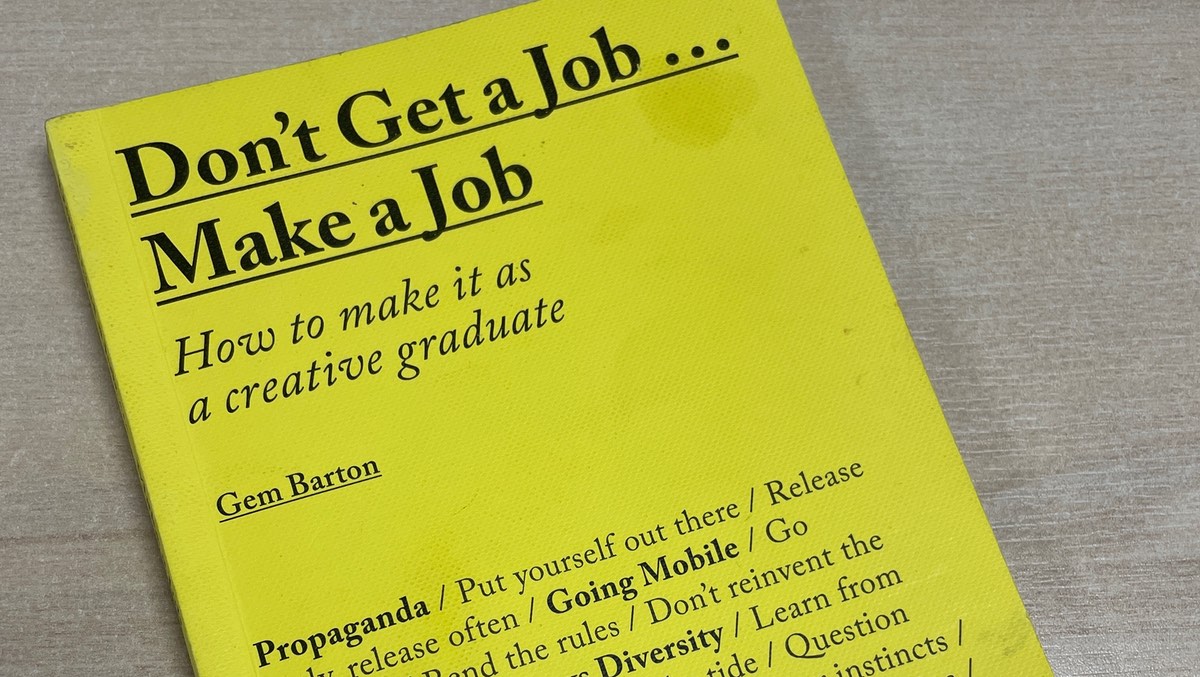
Editor note: This book review has an Amazon affiliate link. The author was not paid or sponsored for this review. This is the first edition from 2016.
One of the perks of being an alumni member of Northumbria University is being a member of its library. It’s got a really good collection of up-to-date and classic business, management, marketing books out of all 3 North East Universities I’ve been to.
It might seem strange in today’s world of digital-first libraries, and AI-bots that can summarise 10K books and give you the bottom line summaries in less than 10 seconds that I sometimes prefer sitting down with a physical book.
Aimed at creative graduates leaving University, “Don’t get a job…” written by Gem Barton is a careers book that asks the reader to consider self employment.
It uses stories from other creatives from around the world, each with a different lens, story of how they got where they are, and what their advice is.
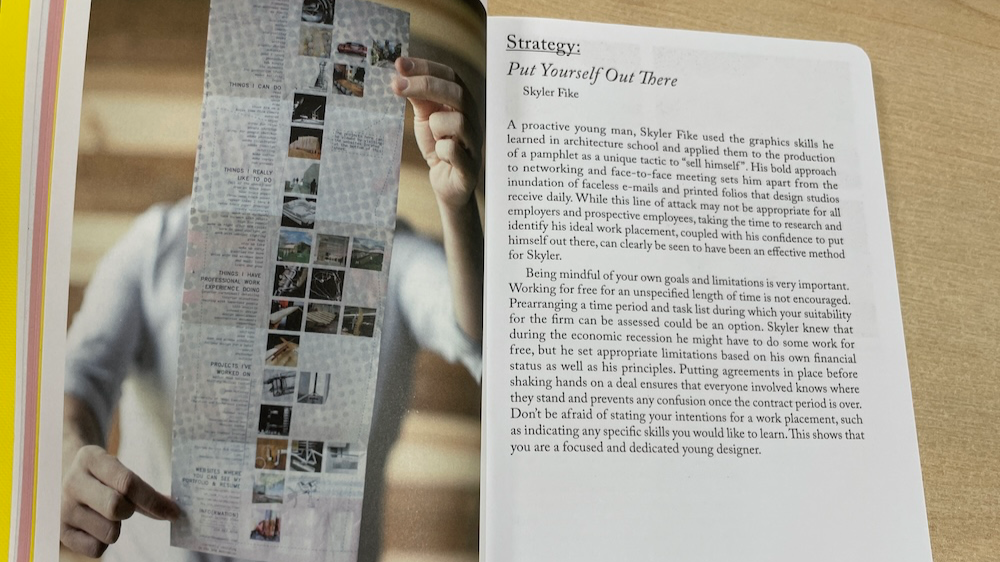
The book is highly visual, with excellent typographic, graphical layout choices, with very inspirational stories of other creatives that are trying different ways to make their own career, forge their own path. Each story is personal, ambitious, hungry and has a viewpoint.
What I really like about this book is the visuals, it connects the story with the creative; sometimes it makes me wonder how to up my own game on how to present creative work.
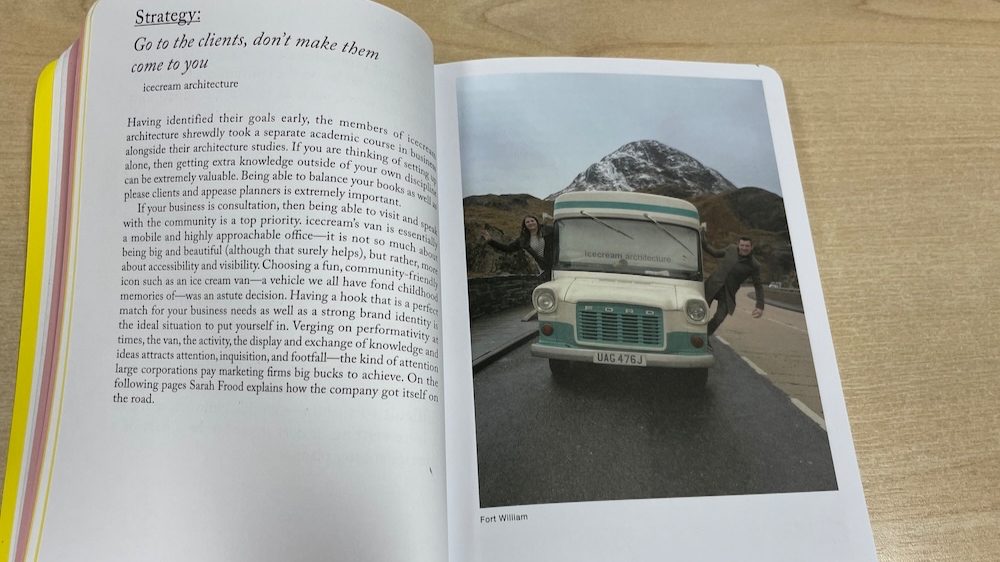
Each section includes stories or case studies from real-world creatives, how they got to where they are, their successes—and mistakes.
What I also find interesting is that book isn’t about creatives sitting in an office with laptops, and I didn’t see any unobtainable silly stories of sitting on a beach or working 2-3 hours a day; instead, there are more useful and interesting – such as the above picture where they got out of the building, use creative guerrilla marketing methods; and this isn’t just a one-off, there are other stories within the book that are similar to this.
The main contents are about self‑promotion (or propaganda), going mobile (go to clients, and don’t wait for them to come to you), specialising in one niche verses lots of skills, trusting your gut (on projects, clients), collaboration verses going solo, and gusto (work with passion, brand, momentum).
On the downside, the book does focus quite a lot on 2008 and in the economic downturn of 2012; and obviously the book was written pre-the current AI boom or in the post-pandemic world. The stories, interviews and viewpoints from studios are a bit unstructured too; sometimes the story will talk about 2-3 different viewpoints in one story.
Although I did enjoy the book, there are 3 parts I wish the book had explored more of:
- Money and bootstrapping. A lot of the examples seem to be from people who seemed to have had money to invest in their business. I’d like to have seen some examples of those who bootstrapped their way up. Not everyone can afford vans, big print, marketing runs, etc.
- Business development (Biz Dev): Getting leads, Winning work, Doing proposals, Getting paid. It doesn’t need to be templates, but stories on what these creatives did to get the lead (or where to fish), win the work, how they deal with work-on-spec, whether they do or don’t do proposals, what do board room meetings look like, and what do creatives need to think, do, say in meetings that the c-suite want?
- Portfolios. I got a lot of inspiration from the visuals, but there is very little on what to put into a portfolio; or what clients expect from portfolios or pitch decks.
My top take-aways from this book
- Don’t wait for a job—create one by designing opportunities around your own strengths, ideas, passions and values.
- Build your personal brand— I think today, as everything seems to be about personal brand, how you present yourself matters more than just academic pieces of paper.
- Experiment —do rather than overthink; real progress comes from action, trying things.
- Collaborate—who can you work with?
- Document your work, wins and losses—this adds to your personal brand, but you can also repurpose this in different channels.
Highly visual, good typography, excellent layout, good encouraging inspirational stories, but lacks practical and actionable advice.
Whilst it isn’t a business book, I would recommend reading this (or the more up-to-date version) for upcoming design and creative graduates who are unsure of what their next path is.
Overall, I’d rate this book 3/5
Links: