Category: General

  • Midway drops ball on TNA:Impact?

    TNA:Impact

    In the IT/web field there is this running joke that whenever working on a project a developer will at some point claim that a project is “90% done”. With the recent Q&A between games publisher Midway and the IGN portal website about the upcoming next generation wrestling game, “TNA: Impact!”, it seems this joke seems quite apt.

    “TNA:Impact!” is an American wrestling in the same vein as WWE (formly known as WWF), and was initially made famous for its high-flying acrobatic “X-Division” (Cruiserweights) section. This was best illustrated in the years between 2004, 2005 and the very recent “World X Cup”, where high-flying, fast-paced wrestling has caught the imagination of WWE and Youtube fans wiery of the stale product dished out by the number 1 name in pro-wrestling.

    With this in mind, TNA have spent the last year and a bit working with Midway publishing (famous for its work on the “Mortal Kombat” series) to create a wrestling game that would outclass WWE’s game, “Smackdown vs Raw”.

    However, in a recent Q&A session with the IGN portal the game makers seem to be holding their hands up and saying the game “isn’t finished, but we released it anyway!”. (more…)

  • PHP-based CMS’

    This is a quick overview of the different Content Management System’s (CMS) I’ve used and my thoughts on them.

    I always choose a CMS based upon ease-of-use, personal feel and what I want to use it for.

    • WordPress (5/5)
      Although it isn’t isn’t an out-right CMS, it’s still one of the best CMS’ out there and sets the benchmark for blogging
    • Drupal (3/5)
      Everyone swears by this CMS. Even the Onion and major newspaper houses use this CMS. It’s said that even the New York Times uses Drupal (I still think they use DragonFly). Even though its a true CMS in the classical sense, I still find it very user-unfriendly. WYSIWYG is not installed by default and there is quite a learning curve. Assuming you can get over this, and the bad user back-end user interface it’s a good little CMS that has lots of potential
    • Expression Engine (3/5)
      Created by the same people who brought us the PHP4 MVC framework CodeIgniter this CMS packs a punch but has a very, very steep learning curve. Version 2.0 is built more on CodeIgniter and is a little more intuitative.
    • Website Baker (3/5)
      Website Baker is a simple straight forward CMS that is designed for very small websites only. Produces everything in valid XHTML/CSS and is very simple to learn, pick and play.
    • MODX (4/5)
      My personal favorite CMS, and winner of the most promising CMS award 2007. MODX is highly programmable but has a steep learning curve. Once you get your head around chunks, snippets, plugins and modules it becomes a very, very powerful CMS. The only problem I found with MODX is that it is very limited in how many pages you can create. On a plus side the CMS is AJAX/XHTML/CSS ready and has a fantastic array of plug-ins and a fantastic help forum, which is more than I can say about Drupal
    • Typo3 (3/5)
      Very large CMS library. Very large indeed. I’ve only ever used it once and overly wasn’t impressed by it.
    • Joomla/Mambo(2/5)
      I just don’t like Joomla. Yes it is a CMS, and yes you can make webpages, etc out of it. But why is it so bloated? Why is the backend overtly confusing?
    • Textpattern(2/5)
      I don’t get the fuss over Textpattern. Yes it has a good architecture, framework and is a good blogging tool, but comparing it to WordPress is like comparing Apples and Oranges. Textpattern has very few plugins/modules, etc for it, and although has a good foundation it has a long way to go for me. Still a lot of programmers, designers swear by TP. If you’re a programmer you’ll probably like Textpattern.
    • eZ publish (2/5)
      EZ Publish (or eZ publish) is one of the most bloated CMS’ I’ve ever seen. The download is huge and although you get bang for your buck. I still think using drupal, wordpress or MODX is more prefable than EZ Publish.

    Other links;

  • How the web has changed the rules on marketing

    With the advent of the Internet, the web and social networking platforms such as facebook, digg and others, marketing has had to change gears.

    The web has opened gateways to reach buyers directly with messages that cost a fraction of what traditional big-budget advertising costs.

    It’s been said that the web is not about one-way interruption, (IE: In your face marketing/dvertising) but what Seth Godin calls permission marketing.

    What works on TV, print and magazines does not necessarily work on the Internet.

    David Meerman Scott’s excellent “The New Rules of Marketing and PR” explores the sea change in online marketing and branding from old-school rules of marketing to new ideas such as social networking, virals, blogs and most importantly interaction.

    Amongst many of the old rules of Marketing that Scott analyses are:

    1. Marketing simply meant advertising (and branding)
    2. Advertising needed to appeal to the masses and is by-in-large, one way
    3. Advertising relies heavily on interruption to get people to pay attention
    4. Advertising and PR were/are seperate disciplines run by different people with seperate goals, strategies and measurement criteria

    Whilst Scott offers the following as new rules on marketing/pr (Often referred to ‘convergence’);

    1. Marketing is more than just advertising
    2. People want authenticity, not spin
    3. People want participation, not propaganda
    4. The Internet has made public relations truely public, and global
    5. Blogs, video, podcasts, and other forms of online content let organisations communicate directly with buyers
    6. The web has merged the lines between marketing, branding and PR into one

    In terms of press releases, the Internet has really changed the goalposts. No longer does a small business have to write to an editor of a newspaper with a “news worthy story” (whatever that might mean) and cross their fingers and wonder if the editor will publish the story.

    With the Internet small businesses can use services like PRWeb and other third-party PR delivery systems that can send the story global.

    Political advocacy via the web during this current American presidential election is perhaps a potent indicator that social media marketing, virals, blogs, videos, etc can make an impact; though whether online advocacy leads to offline voting has yet to be proved.

    In terms of business models, one must be able to prove to customers that is worth paying $X a month for a service that they may get elsewhere for free.

    A lot of what’s known as “web 2.0” businesses give away a majority of their content for free and for extras they create a premium service. That could be a premium online streaming TV channel, or premium content that you wouldn’t otherwise get with free access to their site.

    IGN.com, for example, has lots of free content but they have a premium service which gives you features that you wouldn’t normally get; such as HD video, upcoming news, demos and so forth.

    An excellent technical book called “Web 2.0: A Strategy Guide: Business thinking and strategies behind successful Web 2.0 implementations” by Amy Shuen is an excellent book explaining how web 2.0 can make money and goes into far more detail than I can.

    What the web has proven is that the Internet is not so much about technology as it is about people, using a variety of tools to reach customers/buyers directly and and engaging with them. Online marketing is now all about participation, connection, reaction, involvement and no longer about interruption marketing for the sake of interruption.

    Links and resources;

  • Review – Flashpoint

    Flashpoint

    A tale of high-impact drama and kick-ass action.

    Donnie Yen’s 2007 movie “Flashpoint” is the much anticipated follow-up to his 2005 hit Saat po long (SPL), is an almost perfect Hong Kong action movie. (more…)

  • Web 2.0 Gradients

    30grads_preview

    Dezier Folio has created a fantastic resource, The Ultimate Web 2.0 Gradients, a free download containing well over 100 free gradients.

    Website: Ultimate web 2.0 gradients (DezierFolio.com)

  • Retro classics: Supercars (Amiga)

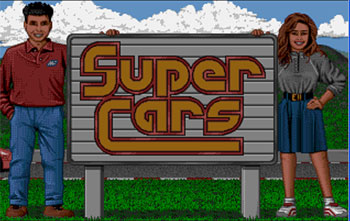
    SuperCars

    I recently found that Supercars, that classic Amiga, PC and Atari classic available online to play via EasyRetro.

    Although the game is a bit buggy, for example – on one level you’re stuck in a tunnel complex and there’s no way out. However, it certainly brought back childhood memories of buying forward rockets / backwards rockets and trying to deal with that slimy car sales person too.

    Links:

  • The UK Apprentice, class warfare, editing and hidden messages.

    Sir Alan

    For the past 2 weeks, like many other viewers, I’ve been watching the new series of the UK apprentice with Sir Alan Sugar, and up to now its been okay – but there are several themes that are running throughout this series which I find slightly disturbing.

    Up to now, this series has been pitched as “cool kids vs. toff kids”, with a majority of the entrants being University graduates with 1st class degrees, or master degree owners, or they’ve ran a business; or are running a business.

    That’s fine. But the hidden message of a “class warfare” only narrowly disguises what I see as a thinly-vielled attempt to make you, the viewer, hate certain people because of their background or accent. (more…)

  • Piers Morgan wins US Celebrity Apprentice

    Piers Morgan

    Former tabloid editor Piers Morgan recently won the US Celebrity Apprentice (watch on youtube). I’ve been watching random clips on the entire show on youtube (clips of US Apprentice on youtube) and it certainly has been entertaining; much more than I originally thought it would be. (more…)

  • Finalcrit: An online web portfolio

    finalcrit

    I was recently at the NCGE Flying Start event in Durham and met with some very intelligent people looking to set up a business; some of whom have already set up a business and are well on the way of getting along in their prospective careers.

    One of the many start up businesses that caught my eye was Finalcrit, an online portfolio very similar to carbonmade and others. Created by Ollie Hunt, Finalcrit is a web 2.0 style website which allows you to create your online portfolio for free and allows users to search for and apply for jobs.

    Whilst the idea of online portfolios has been done before, finalcrit has a distinctive edge to it that I’m sure will help students, graduates, artists, etc from around the UK (if not the world) get a small profile website and help them get a job.

    Website: finalcrit.com

  • Real estate goes social

    Springwise’s latest article on real estate going web 3.0 talks about how various the web 2.0 real estate website “Love that place” is increasingly using social networks (whether third-party or internal) to help users search, discuss, rate, and register their interest in a property; regardless of whether it’s for sale or not.

    As Springwise adds,

    Property owners begin by creating a page and uploading photos of their place—simply to gather feedback and advice, or to test the market and see what other people think. Members of the site can leave comments or send private messages (forums are coming soon), and admirers of a particular property can even send a virtual “door-knock” to see if the owner would consider selling.

    Love That Place is definitely more of a social network than a specific real estate website with features centered around conversation, facilitation and networking and essentially builds a relationship between people, regardless of whether they have something to sell or not.

    Read more about this topic from Springwise’s original article.