Category: Board games

  • Greed Incorporated (2006) – Boardgame Review

    Greed Incorporated (2006)

    Link: https://boardgamegeek.com/boardgame/55952/greed-incorporated

    Publisher: Splotter (2009)

    “Greed is good” – Gordon Gekko

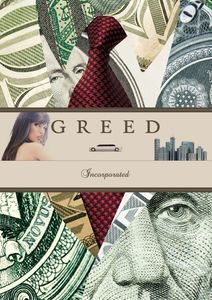
    Published by Splotter in 2009, Greed Incorporated sets 3-5 players in the world of high finance and economics as corporate investors or corporate raiders who are, in my words, actively trying crash companies in order to get a big-time severance pay and use this cash to buy fancy executive toys (ie. Private jets, or Premier League football clubs).

    Thus, unlike in other economic games, players do not win with the highest cash, but rather; the most victory points!

    By most comparisons, the game is very rare, and can easily fetch around the £60 – £150 range on ebay or boardgamegeek; but does it’s rarity and high price really equate to a good game?

    Let’s find out…


    Played over approximately 10 rounds (dependent on number of players), players will run one, or multiple companies; and try to increase their respective companies cash or actively try to trash a company and walk away with a big-time severance pay.

    To do this, players will play 1 card per round; this card will affect the trend and market price for up to 11 different types of goods (ie: Land, Sand, Cotton, etc).

    Prices will be adjusted, dependent upon their trending position (ie: -3, or +2).

    An example:

    Cards
    Some of the asset cards from Greed Inc

    On the example image it shows a few asset cards; and an icon at the bottom shows the change in trends, which in turn will affect the price of the goods.

    Market board
    The main market board in Greed Incorporated

    Once players have played a card, players will bid on the asset cards; adding it it to their corporations’ placard.  This placard will track up to 4 assets, the people within the company’s structure (ie: CEO, CFO, COO) and 3 piles of cash: 

    • New income,
    • Last year’s income, and
    • Free cash

    With exception of free cash, a player may not spend or use New income or Last year’s income

    Interestingly, these 3 piles are a mechanic in the game; where if your company did not make more income than last year – somebody will be fired.   It doesn’t matter if you broke-even.  The only thing that matters is pure profit!

    Indeed, it is when you can’t make a profit that someone will take a fall; during this process, a player may walk away from anywhere between 40% to a maximum of 80% of the company’s free cash.

    When a company does crash, payouts will occur and a corporate restructure will take place; meaning that a player may lose control of their company and a new owner will be decided.

    Planning out who will control a company when it falls can sometimes be an interesting decision:  Do you want to remain in control of a poorly run company when it crashes?  Or, do you want to offload it so that you can funnel that cash and efforts elsewhere?

    Walking away with cash is always tempted.  Indeed, a player’s private cash is the only cash that can be used to purchase VP cards (ie: Private jets, etc); and more interestingly, you can only buy 1 VP card per round.     So timing your company’s crash becomes important, you can get VP early; or wait to get VP when they get better.

    So, after about 10 rounds – whomever has the most VP is the winner of the game.

    Components

    The component quality is very basic, but gets the job done.

    Paper-money, lots of cubes, big-boot markers and a few wooden dollar symbols are all you seem to get.

    There are a bunch of cubes which mark all the different 11 goods, and their respective trend (ie: Land could be trending: -3, 0, +1, +2) and are placed on the main game board, as described earlier.

    Rule book

    Serviceable rule book, seems to explain most actions quite well; be sure to read the Errata.

    The rules also includes a grid which is used to calculate the severance pay for players who crashed their companies, split into two columns: 40% and 20%. However, I recommend writing a simple Javascript app that will do all the necessary calculations for you; and display all figures required.

    My thoughts of the game, and why I eventually sold it

    Having played Greed Incorporated about 5 times, I’m in two minds about the game.

    What I enjoyed:

    The theme, negotiation gamesmanship are all enjoyable. The speed at which the game moves a long can be quick, or slow; dependent upon deals. There is little AP; as all items are public (except perhaps a player’s private cash); so you know what people can produce and all you have to consider is what deal works for you and your multiple companies.

    “Growth! Growth! Holy growth!”

    I really liked the mechanic / narrative that your company must always make a profit, a not simply good enough to break even, you got to beat last year’s expectations!

    I even liked how it didn’t even matter if your company has got over a billion in your free cash; shareholders are only happy if this quarter if you beat expectations.

    Bill Maher highlighted the idea of “growth at any cost” in a 2016 video, which I think neatly reflects this narrative.

    “In corporate America, the stock market is the tail that wags the dog — growth! growth! holy growth is the only thing that ever matters. Better than last quarter! Beat expectations! Eat more hamburgers!”
    url: https://youtu.be/y4X3OSd6HzY?t=209

    I also enjoyed the 18XX style trading mechanic, where you could run up to a maximum of 3 companies and then trade between the companies (ie: Buy Land for $1, then Buy it back again for $100).

    What I did not enjoy

    The game is incredibly linear.  The story, narrative, flow of the game is always the same.  It has only really got 1 main gimmick, and once you’ve seen it; there is very little reason to play the game.

    Despite the idea that you are trying intentionally to crash companies, there never seems to be enough time to do this; and the number of new companies to establish is strictly limited.  This means players need to balance building an engine verses building points, and rarely do you get options to do either.

    There is this notion within the game that speaks to “we want you to crash companies” but then on the other side give you limited tools to accomplish this goal.

    Further, for novice players its very easy to eliminate yourself if you crash your only company and have not enough cash to buy a new company and have to wait around to establish a new one.


    Pros:

    • Strong theme with strong economic and financial ties.
    • Can play fast/quick; but is dependent upon player’s time for deal-making.
    • The game feels like it has something to say about its theme

    Cons:

    • The game is pretty rubbish at 3 players; you NEED to play it with all five players, the more actors mean more opportunities for deals.
    • Feels like there is not enough time to build your engine
    • The game setup is always the same, and other than the variation of the position of the numbered cards within the brackets (10-20, 20-30), there is no modular setup.
    • The game’s narrative is always the same. Prices go up, eventually they fall.
      I feel there are better games about acquisition out there. Acquire is better, some of the lighter 18XX games are better.

    Is it worth buying?

    • Only if your a collector. It certainly (as of time of writing) holds its value.
    • Only if you want to complete your Splotter collection
    • Only if you like economic games with negotiation

    Is it worth playing?

    Yes.

    Play the game. Its worth it, just to understand the flow of money in the game and what the game’s storyline is.

    Overall thoughts

    I enjoyed the game, I did like its narrative and trading and negotiation elements. What I didn’t like is how every game felt the same and the decisions you made, the story flow of the game was very linear. But I guess it has to be that way for the game to weave the story it’s trying to tell.

    Bottom line: Play the game. I just am not sure if its worth buying it, unless you are a collector or need to squash the bug that wants to know if the hype lives up to the delivery.


    Overall: 7/10

    Link: https://boardgamegeek.com/boardgame/55952/greed-incorporated

  • Locomotive Werks review

    Locomotive Werks Box

    Buy Locomotive Werks Board Game on Amazon

    Published in 2002 by Queen Games and designed by Dieter Danziger, this economic game pits 3 to 5 players as investors in building factories that produce locomotives and aim to sell them to a dice-driven market where turn order is critical.

    Locomotive Werks’ main gimmick is “obsolesce”; the idea being that the demand for older trains dries up, often at a very quick pace to the point where older trains become removed from the game entirely.

    This mechanic is often referred to as the “Train Rush” part of an 18XX game.

    So how is the game played?

    The game is a race for coins, specifically, 300 coins (its actually 330 coins once 10% tax is added on); whereafter the game will end and the player with the most coins will win.

    Player’s play in a sequential turn order flow in rounds which are split into 5 phases which are: Purchase Locomotives, Purchase Production, Selling, Pay Taxes, Market Demands.

    The first phase is allowing Purchasing Locomotives, where players have the option to buy a new locomotive factory plant; however they can only buy 1 factory and can only purchase each factory once.

    Further, if its the first to be purchased; then the next factory will become unlocked and available to buy.

    This can cause a chain reaction where players will often buy the next factory because they give a better return on investment.

    Once all players have completed this phase, players move to the next phase: purchasing production.

    Players will go in turn order and optionally choose to buy production units.

    Players must weigh up whether they will be able to sell their production and how long their investment will make a return.

    After purchasing production, the next phase is Selling; this phase is 100% automatic whereupon all locomotive factories sell and fulfil the demand as per the die roll they have; giving the players owning those respective factories a financial payout. Except sometimes, dependent upon die rolls and demand fulfilment, some players may not get any payout at all; and this is where player turn order becomes important.

    Once everyone has sold, everyone will pay taxes of 10% rounded down; so if you have 10 coins, you’ll be paying 1 coin as a tax.

    After tax, if any player has over 300 coins; then the game is ended, with the winner being the most coins; if not, then the game will continue play.

    The final phase is Market demands, where new orders are given and older generations start lose demand and slowly become obsolete.

    For example, if there are 2 green generation train factories on the market; then the older factory will steadily lose dice and lose potential orders to the point where it has no orders at all and is considered obsolete.

    Worse still is there are 3 green generation factories in play then the eldest locomotive train is removed from the game.

    Players with those factories are lumbered with produced units that they can’t sell and their only resort is to shift production to better technologies.

    So, what are my thoughts on the game.

    The game is about sales fulfilment speculation, buying production and sales turn order; with players usually aiming to grab a monopoly as they will be the only one to sell for that factory.

    There is one major downside to the game. Everything in the game is public knowledge; and feels like a game with perfect information.

    This opaqueness comes from the fact that all players’ factories, coins and ability to produce is publicly visible to all players; so you already know who can sell what, how many they can sell and whether they will sell at all!

    From this point of view, new players will feel that are hardly any real meaningful decisions; except one — will you buy production and will you sell this round, and if not this round, can you manipulate turn order to sell the next round?

    At lower player counts the ability to sell becomes even more opaque and our group felt there were no real decisions to be made, except whether to buy a factory, whether to produce or not.

    The factories are also lined up in a sequential list order; this means you know that better tech will pay out better than lower tech. For newer players; the better technology is almost always better to buy whereas the more astute players can manipulate sales turn order in their favour; even buying on factories that are due to be obsolete; just so they can squeeze the turn order further.

    This linear progression of each train’s costs, incomes and production costs further enhances the illusion that the only decision in the game is to keep buying new locomotive engines; except I feel that this is a newbie mistake.

    This opaqueness and linear progression really masks the true modus operandi of this game — its really all about manipulating turn order so that you can sell first and have certain factories with low competition.

    If players realise this, then the turn order’s importance will result in players’ buying a lot of production so that they don’t hit the tax threshold and going earlier in next round.

    However, no matter how many times I’ve played this game, people go through the motions and it sadly feels the game is playing automatically, that there are not enough hard decisions to be made and that because everything is opaque that unless people try to compete in factories you can play without humans as all decisions seem to be automatic and binary.

    Further there are no other routes to success; you have no direct impact on sales; you cannot influence it via sales people or use marketing as a way to drum up business.

    Despite all of this, I’m still drawn to playing Locomotive Werks; I see it as a good way to teach kids about sales forecasting, and also the train rush aspect of the game can be interesting every now and again.

    In all, I believe the game really only shines at 4 or 5 people; and is something I would play every now and again but isn’t in any way a game I can recommend to purchase except to 18XX and train fans.

    Overall: 5/10

    Buy Locomotive Werks Board Game on Amazon

  • Greed Inc Payout Calculator – Javascript

    This simple tool today that I wrote for the game Greed Incorporated using Javascript rather than using the payout chart

    Link: https://jsfiddle.net/worchyld/85khszq3/

  • A look at UK Games Expo 2016

    A look at UK Games Expo 2016

    Now in its 10th year, the world famous UK Games Expo is the biggest hobby games convention in the UK, showcasing various thousands of card, board, role-playing, miniature, and family games games under one roof.

    With over 170 exhibitors, publishers, retailers, independent designers and artists; the event is set to the be the largest yet.

    Aimed squarely at families, the general public and the enthusiast alike; the UK Games Expo is an accessible, family-friendly annual event held at the NEC Hilton Metropole, Birmingham (just next to Birmingham International Airport/Railway station) and aims to be the peak event where all aspects of the growing tabletop hobby are represented.

    Having attended 3 prior events, I can safely say that the event is a fun, friendly atmosphere; easily accessible and open to the general public. Wandering around trade stands, trying out new and old games alike is a fantastic experience.

    Usually held over 3 days, the event offers a range of tournaments and championships for popular games, like Ticket to Ride and the chance to play the newest released games.

    There is also a large bring and buy trade fair, which attracts many enthusiasts and offers a great chance to grab a bargain, or that rare game you’ve been after.

    In addition, the playtest area is a great area; upcoming designers bring their latest creations and get the general public to play them. It’s great to see so many designs that are coming through and shows that anybody with a great idea, that is willing to put in the time to refine it can make it.

    One of the great appeals of the UK Games Expo is that it is open to the public, you can book in advance or purchase tickets on the day.

    Just look out for the Game Ambassadors in blue shirts – if you are new, on your own or just lost ask them and they will help.

    For more information, or to book tickets visit:

    http://www.ukgamesexpo.co.uk/

  • My recommended economic boardgames

    So, you’re thinking of buying a board game perhaps for a spouse, a friend or family. The typical go to point is Monopoly.

    I don’t really like Monopoly. It was invented last century. Let that sink in for a while. A whole century!

    Its decisions are also sterile; you really don’t get to make any — its all dependent upon a roll and move mechanic that is pretty archaic.

    Further, everyone plays the rules wrong. There is no free parking money pot, properties are bought from the get-go; and auctions/trading are meant to be encouraged.

    The biggest problem I have is, it takes forever and I don’t feel like its fun or engaging or rewarding to play.

    Since then there has been a revolution in board games from Germany and elsewhere typically called Euro Games; these games are more fun, typically don’t have player elimination, everyone is involved and strategy/well-laid out plans are rewarded.

    I’ve heard from someone that board games ruins the entrepreneurial spirit. I disagree. If you have the right kind of game, one that is rewards strategy, and reduces luck and promotes core skills like maths, social connectivity and can be fun.

    Having played a number of euro board games over the past 3-4 years here’s a few games I would recommend (In no particular order).

    Acquire

    Yes; it was invented last century and can be quite dry and abstract; but it beats Monopoly any day of the week.
    Its a stock holding game, where you invest or expand hotels that can merge with other hotels and reap dividends to those who have invested in to them.

    The game is perfect for those tech startups whom are looking to be “acquired”; as it perfectly reiterates the mantra of building a small company, build its value and sell it!

    I would recommend the 1990 version; not the crappy current cardboard version. Or the earlier 1960/1970 versions as these have a unique look.

    Link: Acquire (Amazon)

    Mombasa

    Currently my favorite game right now. Players are investors in Colonial Africa; but don’t let the theme scare you, its actually got a few really good mechanics – one of which is the way it uses cards into discard piles.

    Its a stock holding game, where you are trying to push up the price of the various companies you have invested in, but also offers other routes including moving up a diamond track and creative book-keeping; both of which give you points (cash) at the end of the game.

    Highly recommended

    Link: Mombasa (Amazon)

    Power Grid

    Become a “Monty Burns” industrialist building power plant factories on the map representing various locations such as Germany or the United States (other expansion maps do exist) where you need finances to win power plants at an auction, then buy its raw materials (such as nuclear, coal and oil) in a very interesting supply and demand system — where goods can be cheaper if they are plentiful, or alternatively can be more expensive the higher the good costs are.

    Its not a race for money (although that certainly helps), but a race to build a number of power plants that can successfully power a number of cities.

    Link: Power Grid (Amazon)

    Panamax

    Players operate ships laden with goods through the famous Panama canal from one side to the other, timing their movements carefully and ensuring that they do not leave their goods in the warehouse or leave the ship in areas with big taxes. Timed movements can push out other ships.

    It also has a simplified 1 dimensional stock market, and players can invest in rival player’s companies.

    In addition, players can add their goods onto rival goods. The reason you’d do this is because if you are invested in the company it can pay off for you too as its value goes up.

    Link: Panamax (Amazon)

    All these games are a good start for economic board games.